




What are the characteristics of high - manganese steel in casting machining?
 Oct 19, 2026|
High-manganese steel, also known as Hadfield steel, has been a cornerstone in the steel casting machining industry for many years. As a leading steel casting machining supplier, we have in - depth experience and understanding of the unique characteristics of high - manganese steel in casting machining.
Chemical Composition and Its Influence
High - manganese steel is characterized by a high manganese content, typically ranging from 11% to 14%. Alongside this, it contains about 1.0% to 1.4% carbon. The high manganese content plays a vital role in the steel's properties. Manganese has a strong affinity for carbon, which helps to form austenite at room temperature. Austenite is a face - centered cubic (FCC) structure, and it gives high - manganese steel its remarkable toughness.
The carbon in high - manganese steel contributes to its hardness and strength. When the steel is cast, the carbon atoms are in solid solution within the austenite matrix. This solid - solution strengthening effect enhances the overall mechanical properties of the steel. However, the high carbon content also means that the steel is more prone to carbide precipitation during heat treatment, which can have implications for casting and machining processes.
Casting Characteristics
Fluidity
One of the significant advantages of high - manganese steel in casting is its relatively good fluidity. Good fluidity is crucial in the casting process as it allows the molten metal to fill complex mold cavities accurately. The high temperature of the molten high - manganese steel and its chemical composition contribute to this property. This characteristic enables us to produce intricate and high - precision castings, which is highly beneficial for applications that require detailed and complex parts, such as in the mining and construction industries.
Shrinkage
High - manganese steel has a relatively high solidification shrinkage rate. During the cooling process from the molten state to the solid state, the volume of the steel decreases. This shrinkage can lead to the formation of shrinkage cavities and porosity in the castings if not properly controlled. To address this issue, as a steel casting machining supplier, we use advanced gating and riser systems design. These systems are carefully engineered to ensure that the molten metal can continuously feed the solidifying casting, compensating for the shrinkage and minimizing the formation of defects.
Hot Cracking Susceptibility
High - manganese steel is susceptible to hot cracking during casting. The high carbon and manganese content, along with the presence of impurities such as sulfur and phosphorus, can increase the likelihood of hot cracking. Sulfur, in particular, forms low - melting - point compounds that can cause the steel to become brittle at high temperatures. To prevent hot cracking, we strictly control the raw material quality, reducing the sulfur and phosphorus content to a minimum. Additionally, we optimize the casting process parameters, such as the cooling rate, to ensure a uniform solidification process.
Machining Characteristics
Work - Hardening
One of the most distinctive characteristics of high - manganese steel in machining is its extreme work - hardening ability. When the steel is subjected to machining forces, such as cutting, grinding, or forging, the surface layer rapidly hardens. This work - hardening phenomenon can make subsequent machining operations more difficult. The hardness of the work - hardened layer can reach several times that of the original material, increasing tool wear and reducing machining efficiency.
To overcome this challenge, we use special cutting tools made of high - speed steel or carbide with advanced coatings. These tools are designed to withstand the high cutting forces and the abrasive nature of the work - hardened surface. Additionally, we optimize the machining parameters, such as the cutting speed, feed rate, and depth of cut, to minimize the work - hardening effect and improve the machining quality.
Low Machinability
Due to its work - hardening characteristic and high toughness, high - manganese steel generally has low machinability. The high toughness of the steel makes it difficult to break chips during machining, resulting in long, continuous chips that can cause problems such as chip jamming and surface damage. To improve machinability, we can use lubricants and coolants during machining. These substances help to reduce the cutting temperature, lubricate the cutting tool, and break the chips, thereby improving the machining efficiency and surface quality.
Applications
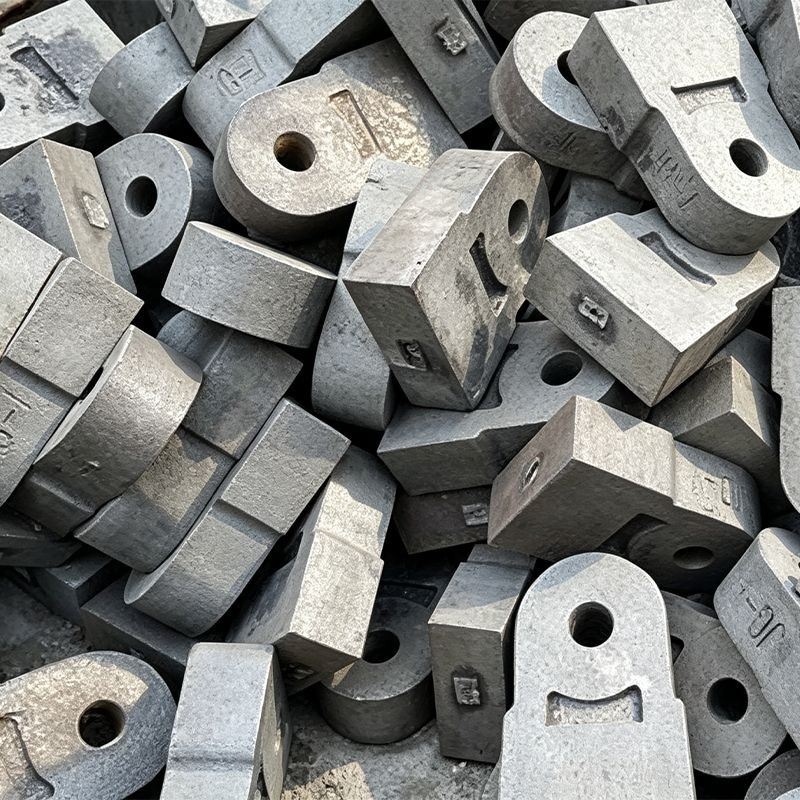
High - manganese steel's unique characteristics make it suitable for a wide range of applications. In the mining industry, it is commonly used to manufacture wear - resistant parts such as crusher jaws, hammer heads, and conveyor liners. The work - hardening ability of high - manganese steel allows these parts to maintain their hardness and wear resistance under high - impact and abrasive conditions.
In the construction industry, high - manganese steel castings are used in equipment such as excavators and loaders. The good casting fluidity enables the production of large - scale and complex - shaped parts, while the high toughness and wear resistance ensure the long - term reliability of the equipment.
Comparison with Other Types of Steel Casting
Compared with Heat Resistant Casting, high - manganese steel is not primarily designed for high - temperature applications. Heat - resistant casting alloys are formulated to maintain their strength and integrity at elevated temperatures, often containing elements such as chromium and nickel. In contrast, high - manganese steel's performance is more focused on wear resistance and toughness at normal temperatures.
Carbon Steel Casting has a simpler chemical composition compared to high - manganese steel. Carbon steel's properties are mainly determined by its carbon content, and it generally has lower toughness and work - hardening ability than high - manganese steel. However, carbon steel is often more cost - effective and easier to machine, making it suitable for applications where high - end performance is not required.
Alloy Steel Casting contains various alloying elements to achieve specific performance. While some alloy steels may have similar toughness or wear resistance to high - manganese steel, the work - hardening mechanism of high - manganese steel is unique. Alloy steels can be tailored to different applications, such as corrosion - resistant or high - strength applications, depending on the alloy composition.
Wear Resistant Casting is a broad category that includes high - manganese steel. However, other wear - resistant castings may use different materials and mechanisms. For example, some wear - resistant castings use ceramic particles or other hard phases to enhance wear resistance, while high - manganese steel relies on its work - hardening ability.
Stainless Steel Casting is known for its corrosion - resistant properties. Although high - manganese steel can have some corrosion resistance, it is not its primary advantage. Stainless steel contains chromium, which forms a passive film on the surface to prevent corrosion, while high - manganese steel's focus is more on wear and impact resistance.
Our Capabilities as a Supplier
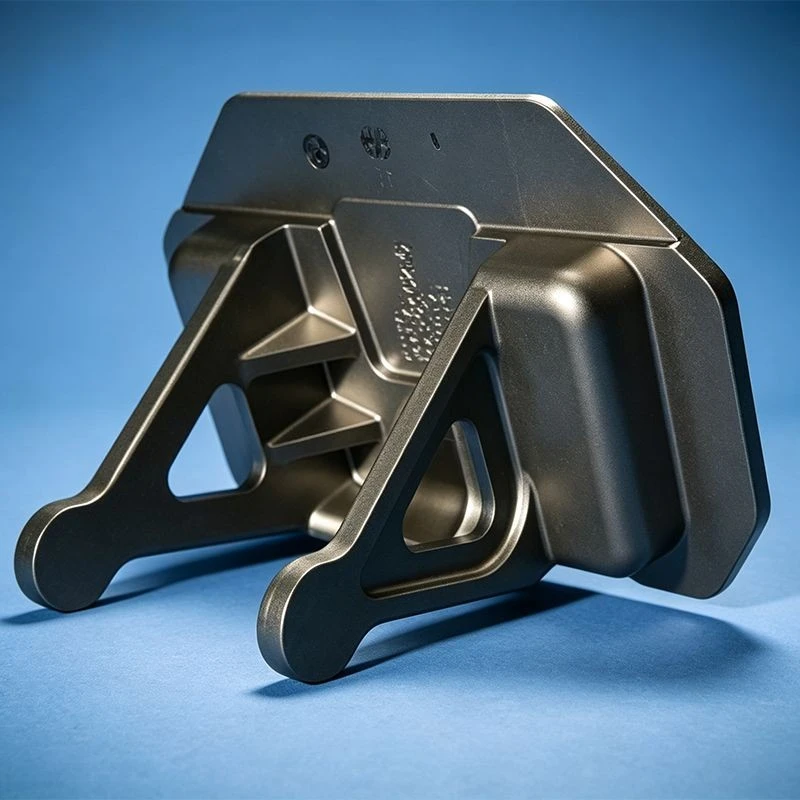
As a steel casting machining supplier, we have a comprehensive set of capabilities to handle high - manganese steel projects. We have state - of - the - art casting equipment, which allows us to produce high - quality high - manganese steel castings with precise dimensions and complex geometries. Our experienced technicians can control the casting process parameters strictly to ensure the quality and performance of the castings.
In terms of machining, we have a variety of advanced machining tools and technologies. Our machining processes are optimized to deal with the challenges of high - manganese steel, such as work - hardening and low machinability. We can provide custom - made machining services according to our customers' specific requirements, whether it is rough machining or precision finishing.
Contact for Purchase and Negotiation
If you are interested in high - manganese steel casting machining products or have other steel casting needs, we welcome you to contact us for further purchase and negotiation. We are committed to providing high - quality products and excellent service to meet your industrial requirements.
References
- "Metallurgy of Steel" by George Krauss. This book provides in - depth knowledge about the chemical composition, structure, and properties of different types of steel, including high - manganese steel.
- "Casting Manufacture: Processes, Design, and Quality Control" by Taylor & Francis. It offers detailed information on the casting process, including the challenges and solutions in casting high - manganese steel.
- "Machining of Metals: An Introduction to the Theory and Practice of Cutting and Grinding" by R. J. K. Wood. This reference helps in understanding the machining characteristics of high - manganese steel and the corresponding machining techniques.